
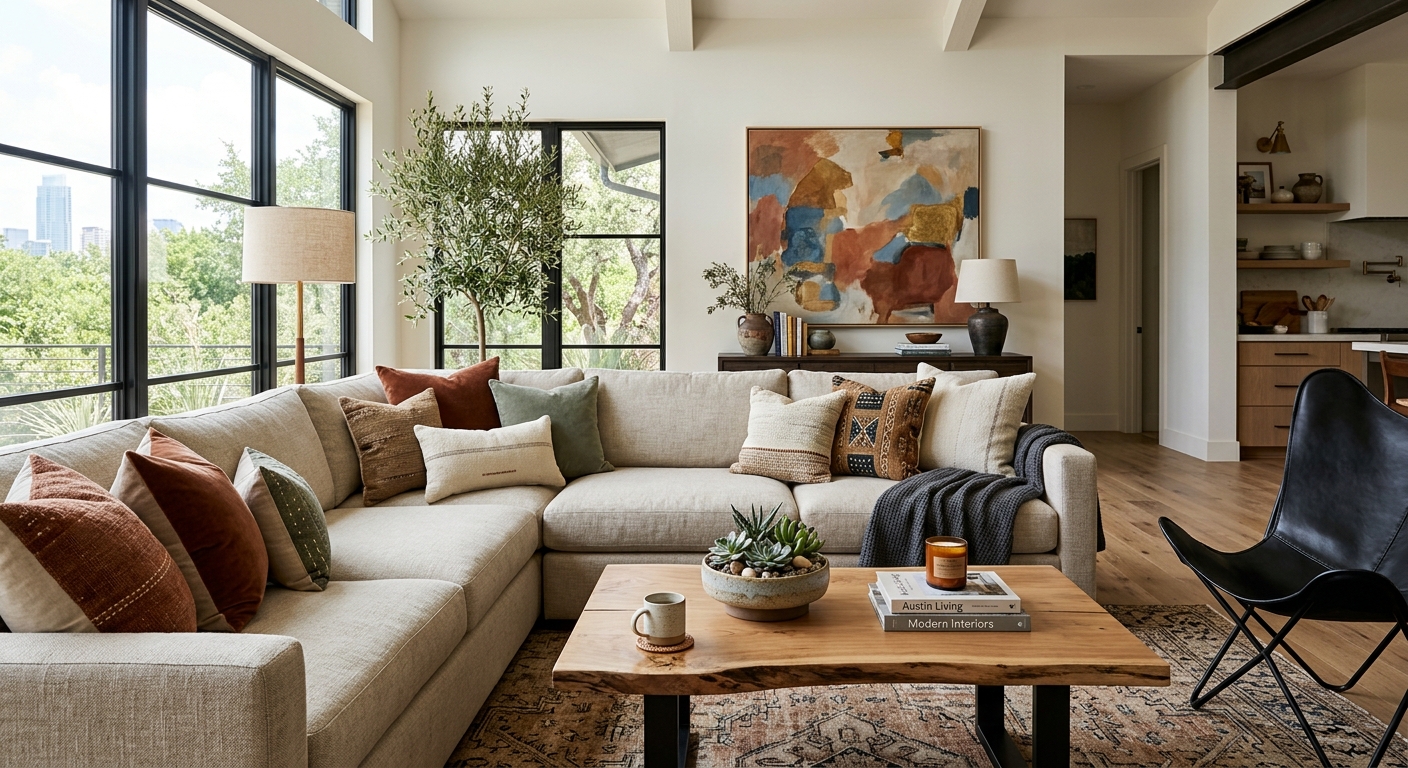
Gathered, Not Decorated: Building a Home That Feels Collected
There's a particular kind of room that stops you at the doorway - layered, warm, quietly confident, like it was assembled over a lifetime of good decisions. That feeling has a name in our studio: gathered, not decorated. It's the difference between a house that was furnished and a home that was lived into.
What "gathered" actually means
A decorated room is bought in one trip and reads that way - matched sets, everything the same age, nothing with a story. A gathered room mixes eras and price points on purpose: a vintage rug under a custom sofa, a flea-market lamp beside a considered art piece. The tension between high and humble is what makes it feel real.
Build a base, then collect
Start with the pieces that anchor a room - upholstery, rugs, lighting - and invest where you touch and sit. Around that base, leave room to collect: the ceramic you'll find on a trip, the chair you'll inherit, the painting you'll fall for later. A home that's 100 percent finished on move-in day has nowhere left to grow.
Texture does the quiet work
Warmth rarely comes from color alone. It comes from texture - nubby linen, aged brass, hand-thrown ceramics, oak with visible grain. When a palette stays disciplined, as ours tends to (plaster, olive, walnut, brass), texture is what keeps a neutral room from reading flat.
Edit as much as you add
Gathering isn't hoarding. For every piece that earns its place, something has to go. The most collected-looking rooms are also the most edited - every object present because someone chose it, not because it filled a gap.
The long game
A gathered home is a practice, not a purchase. Our job is to build the framework - the palette, the plan, the anchor pieces - that lets your home keep becoming more itself for years after we've placed the final vase.
